Modern electronic devices rely heavily on responsive, durable, and reliable input systems. Whether it’s a medical device, industrial controller, remote control, or automotive interface, the keypad technology used directly affects user experience and long-term product reliability.
That’s why the debate around conductive carbon pills vs metal dome keypads has become increasingly important for engineers, manufacturers, and product designers.
Both technologies dominate different areas of the electronics industry. One focuses on flexibility and cost efficiency, while the other delivers crisp tactile response and premium feedback. Choosing the wrong option can impact durability, manufacturing costs, waterproofing performance, and overall product quality.
In this guide, we’ll break down:
- how both keypad technologies work
- their advantages and limitations
- tactile performance differences
- lifespan comparisons
- latest keypad industry trends in 2026
- which option is best for specific electronic products
What Is the Difference Between Conductive Carbon Pills and Metal Dome Keypads?
The main difference between conductive carbon pills vs metal dome keypads lies in their switching mechanism and tactile response.
Conductive carbon pills use conductive rubber contacts embedded inside silicone keypads to complete electrical circuits, offering a softer and quieter feel. A metal dome keypad, on the other hand, uses stainless steel domes that collapse when pressed, creating a sharp tactile click and faster feedback.
Both are widely used among modern keypad switch technologies, but each serves different product requirements.
What Are Conductive Carbon Pills?
Understanding Conductive Rubber Technology:
If you’ve ever wondered, What are conductive carbon pills? they are small conductive rubber contacts placed underneath silicone buttons. When a user presses the keypad, the conductive pill touches the PCB contact points and completes the electrical circuit.
These are commonly used inside:
- TV remotes
- medical devices
- handheld electronics
- calculators
- smart home devices
- wearable electronics
A conductive rubber keypad is popular because it combines:
- flexibility
- waterproofing
- lower manufacturing cost
- quiet operation
Unlike mechanical switches, conductive rubber contacts offer smooth actuation without loud clicking sounds.
How Conductive Carbon Pills Work?
The operation process is relatively simple:
- User presses silicone button
- Carbon pill compresses downward
- Conductive surface touches PCB contacts
- Electrical signal activates the device function
This design reduces mechanical complexity and improves resistance against dust and moisture.
What Is a Metal Dome Keypad?
A metal dome keypad uses stainless steel domes placed over PCB circuits. When pressed, the metal dome collapses and snaps back instantly, creating a noticeable tactile click.
This tactile mechanism is why metal domes are heavily used in:
- industrial equipment
- automotive controls
- military electronics
- POS systems
- medical control panels
- consumer electronics requiring premium feedback
Compared to conductive rubber solutions, metal domes provide:
- sharper tactile response
- faster actuation
- higher precision feedback
- premium user feel
Why Tactile Feedback Matters in Modern Electronics?
One of the biggest factors in choosing between keypad technologies is tactile feedback in keypads.
Users subconsciously judge product quality through button feel.
Weak or inconsistent feedback can make devices feel cheap or unreliable. Strong tactile response improves:
- user confidence
- typing accuracy
- operational speed
- accessibility
- perceived product quality
In industrial and medical environments, tactile response becomes even more critical because operators often use devices while wearing gloves or working in fast-paced environments.
Conductive Carbon Pills vs Metal Dome Keypads | Key Differences:
Tactile Keypad Comparison:
| Feature | Conductive Carbon Pills | Metal Dome Keypad |
| Tactile Feel | Soft & smooth | Sharp & clicky |
| Noise Level | Quiet | Audible click |
| Waterproof Resistance | Excellent | Moderate |
| Flexibility | High | Moderate |
| Manufacturing Cost | Lower | Higher |
| Lifespan | High | Very high |
| User Feedback | Gentle | Precise |
| Best Use Case | Consumer devices | Industrial & premium electronics |
This tactile keypad comparison shows why different industries prefer different technologies.
Which Technology Offers Better Tactile Feedback?
When discussing Best keypad switch for electronics, tactile response becomes one of the deciding factors.
Conductive Carbon Pills:
These provide:
- softer actuation
- smoother pressing
- quieter interaction
- comfortable repeated use
They are ideal for:
- remote controls
- wearable devices
- waterproof products
- low-noise environments
Metal Dome Keypads:
Metal domes deliver:
- crisp tactile click
- faster response recognition
- stronger actuation confirmation
- higher precision
These are preferred in:
- industrial machinery
- automotive systems
- gaming accessories
- medical equipment
Latest Industry Insights on Keypad Technologies (2026):
The keypad industry continues evolving alongside IoT devices, smart electronics, and compact hardware design.
Major Trends in 2026:
Increased Demand for Hybrid Keypads:
Manufacturers are now combining silicone rubber with metal dome structures to achieve both waterproofing and premium tactile response.
Growth of Medical Electronics:
Medical device manufacturers increasingly prefer antimicrobial silicone keypads with conductive carbon pills because they are easier to seal and clean.
Ultra-Thin Device Interfaces:
Modern electronics are pushing toward slimmer interfaces, increasing demand for compact metal dome integration.
Demand for Longer Lifecycle Electronics:
Industrial manufacturers now prioritize keypad solutions exceeding 1 million actuations to reduce maintenance costs.
According to multiple electronics manufacturing industry reports, tactile interface reliability remains one of the top factors influencing product usability and customer satisfaction in consumer electronics.
Durability and Lifespan Comparison:
Durability is another important factor when comparing Conductive carbon pills vs metal dome keypads.
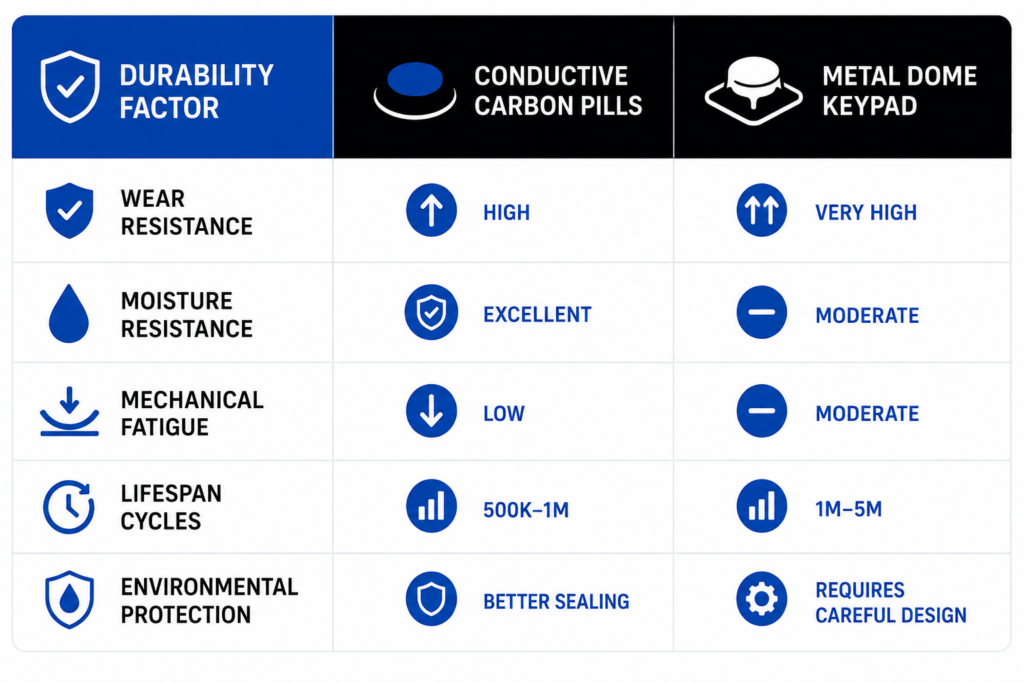
While metal domes often last longer mechanically, conductive rubber systems usually perform better in harsh or moisture-heavy environments.
Cost Comparison Between Both Keypad Technologies:
Cost plays a major role during product development and manufacturing scaling.
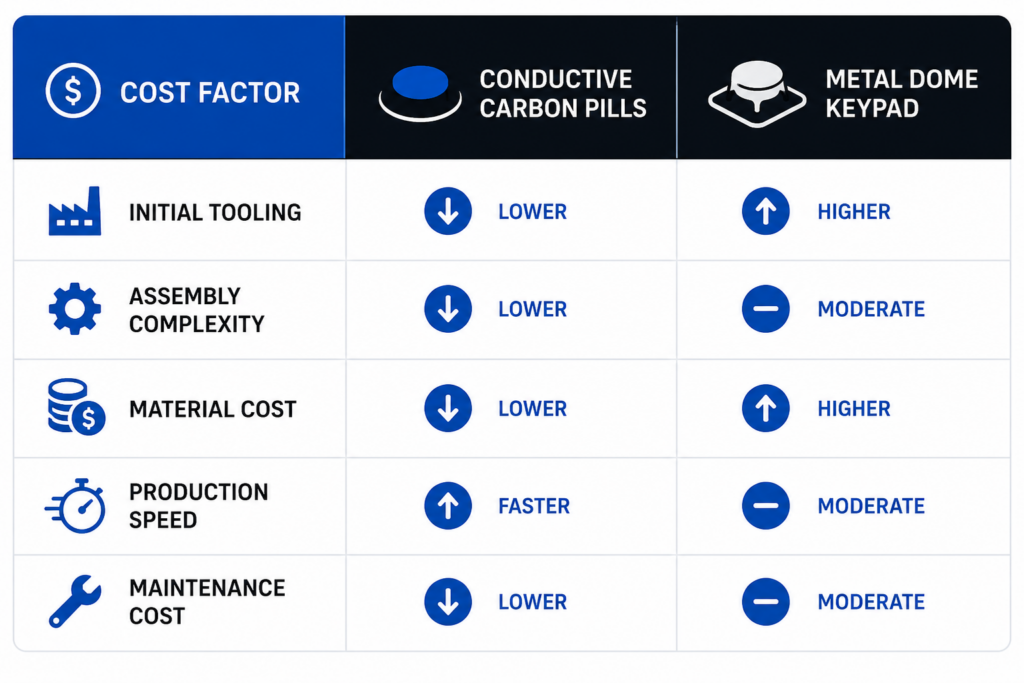
For budget-sensitive consumer electronics, conductive rubber often becomes the more economical solution.
For premium electronics requiring precision feedback, metal domes justify the higher investment.
Best Applications for Conductive Carbon Pills:
A conductive rubber keypad works best in applications requiring:
- flexibility
- waterproofing
- quieter operation
- lower manufacturing cost
Common Applications:
- TV remotes
- wearable electronics
- fitness devices
- smart home controls
- portable medical devices
- handheld electronics
Best Applications for Metal Dome Keypads:
A metal dome keypad is ideal for products needing:
- precision tactile response
- fast operator confirmation
- premium button feel
Common Applications:
- industrial control systems
- automotive dashboards
- POS terminals
- aerospace electronics
- medical machinery
- gaming devices
Important Design Considerations Before Choosing a Keypad:
Before selecting between different keypad switch technologies, engineers should evaluate:
Environmental Conditions:
Will the device face:
- moisture
- dust
- chemicals
- outdoor environments
User Experience Goals:
Do users need:
- soft touch
- silent operation
- tactile click confirmation
Product Lifespan Requirements:
Industrial systems often require millions of actuations.
Manufacturing Budget:
Consumer products may prioritize cost optimization over premium tactile feel.
Device Thickness Constraints:
Compact electronics may benefit from thinner switch structures.
Which Keypad Technology Is Better?
There’s no universal winner in the debate around conductive carbon pills vs metal dome keypads.
Choose Conductive Carbon Pills If:
- waterproofing matters
- quieter operation is needed
- manufacturing cost must stay low
- flexibility is important
Choose Metal Dome Keypads If:
- tactile precision matters
- users need strong click feedback
- premium interaction is desired
- industrial reliability is critical
The best solution depends entirely on your product goals and user expectations.
Also Read: Design Guidelines for Custom Silicone Keypads
Final Thoughts:
As electronic products become smarter, smaller, and more user-focused, choosing the right keypad technology becomes increasingly important.
Both conductive rubber systems and metal dome switches continue dominating modern electronics because each solves different engineering challenges.
Understanding differences in:
- tactile response
- durability
- environmental resistance
- manufacturing cost
- user experience
can help manufacturers design more reliable and competitive products.
If you’re developing custom electronic products and need expert guidance on keypad integration, PCB compatibility, or manufacturing support, Interchange Electronics offers reliable solutions for custom electronics manufacturing, silicone keypad integration, and component sourcing.
FAQs
What are conductive carbon pills used for?
Conductive carbon pills are used inside silicone rubber keypads to complete electrical circuits when buttons are pressed. They are commonly found in remote controls, medical devices, calculators, and smart electronics.
Are metal dome keypads more durable?
Yes, metal dome keypads generally provide longer mechanical lifespan cycles compared to conductive rubber contacts. However, conductive rubber keypads often offer better moisture resistance.
Which keypad technology provides better tactile feedback?
Metal dome keypads typically provide sharper and more precise tactile feedback, while conductive carbon pills offer softer and quieter button response.
What is the best keypad switch for electronics?
The best keypad switch for electronics depends on the application. Conductive rubber keypads work well for waterproof and cost-sensitive devices, while metal dome keypads are ideal for premium or industrial electronics requiring precise tactile response.