Precision manufacturing is one of the biggest investments behind modern industrial products.
From electronics enclosures and aerospace components to medical devices and industrial equipment, CNC machining plays a major role in product quality, reliability, and scalability. But one of the most common questions businesses ask is:
How much does CNC manufacturing actually cost in Canada?
The answer depends on several factors including:
- Material selection
- Part complexity
- Production volume
- Tolerances
- Machine time
- Surface finishing
- Engineering support
The real Cost of metal CNC manufacturing in Canada helps businesses avoid unexpected expenses while making smarter production decisions.
Whether you are building prototypes or scaling production, knowing the key pricing factors can help improve profitability and manufacturing efficiency.
What Is Metal CNC Manufacturing?
Metal CNC manufacturing uses computer-controlled machinery to cut, shape, and machine metal parts with extreme precision. Modern CNC systems follow CAD/CAM software instructions to produce consistent and highly accurate components.
Common CNC Machining Processes:
CNC Milling:
Cuts and shapes complex surfaces and geometries.
CNC Turning:
Used for cylindrical components such as shafts, bushings, and threaded parts.
Drilling and Finishing:
Adds holes, threading, polishing, and finishing touches.
These automated processes improve production consistency while reducing manual labor errors.
What affects the cost of CNC manufacturing in Canada?
The cost of CNC manufacturing in Canada depends on materials, machining complexity, tolerances, production volume, machine time, setup requirements, and finishing processes.
Average CNC Machining Cost in Canada:
The overall CNC machining cost Canada businesses pay can vary significantly depending on project requirements.
Typical CNC Machine Shop Rates:
Most Canadian CNC machine shops charge based on:
- Machine complexity
- Labor expertise
- Material requirements
- Production duration
Estimated CNC Machining Cost Per Hour:
The final CNC machining cost per hour depends on machine capabilities, programming complexity, and operator expertise.
According to manufacturing industry estimates, advanced precision machining operations can increase productivity by up to 40% compared to traditional machining methods.
Estimated Cost Range by Project Type:
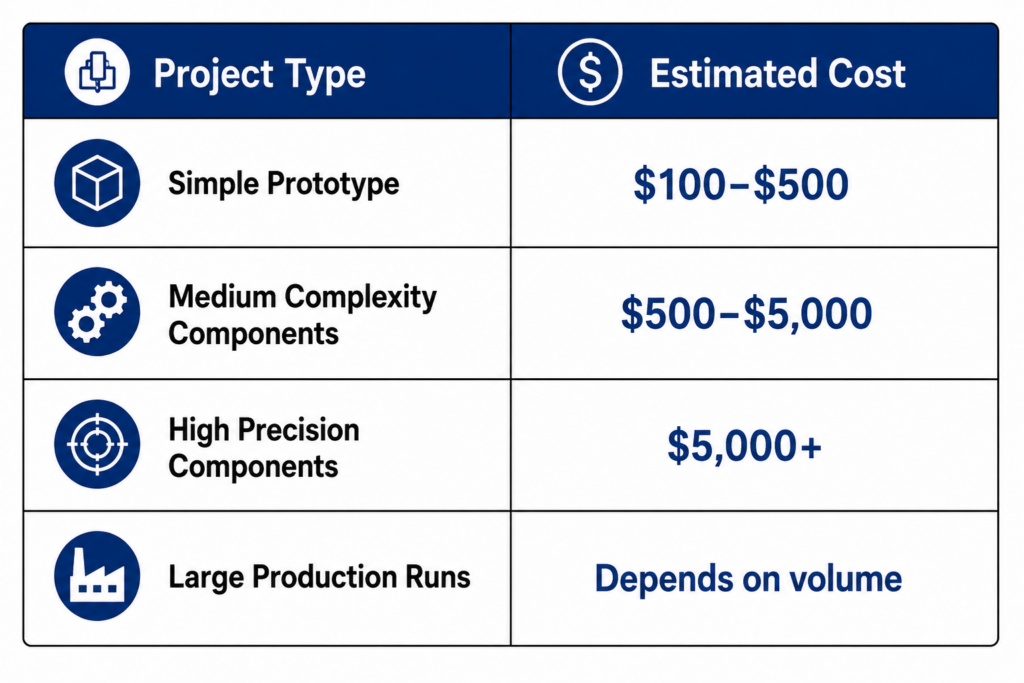
The more precise and complex the part becomes, the higher the overall CNC manufacturing cost.
Main Factors That Affect CNC Manufacturing Costs:
Several major factors directly influence CNC pricing.
Understanding these CNC manufacturing pricing factors helps businesses plan budgets more effectively.
Material Selection:
The type of metal significantly impacts machining costs.
Some materials machine easily, while others require slower speeds, specialized tooling, and additional labor.
Aluminum CNC Machining Cost:
Aluminum CNC machining cost is generally lower because aluminum:
- Machines quickly
- Generates less tool wear
- Is lightweight
- Requires less cutting force
Aluminum is widely used in:
- Electronics
- Automotive parts
- Consumer products
- Aerospace components
Benefits of Aluminum Machining:
| Benefit | Impact |
| Faster machining speeds | Lower production cost |
| Lightweight material | Easier handling |
| Corrosion resistance | Better durability |
| Excellent machinability | Reduced tool wear |
Stainless Steel CNC Machining Cost:
Stainless steel CNC machining cost is usually higher because stainless steel:
- Is harder to machine
- Generates more heat
- Requires stronger tooling
- Slows machining speed
However, stainless steel provides:
- Exceptional durability
- Corrosion resistance
- High structural strength
- Long-term reliability
It is commonly used in:
- Medical equipment
- Industrial systems
- Food-grade applications
- Harsh operating environments
Material Cost Comparison:
| Material | Relative Cost | Machining Difficulty |
| Aluminum | Lower | Easy |
| Stainless Steel | Moderate-High | Moderate |
| Titanium | High | Difficult |
Part Complexity and Design:
Complex designs increase production costs.
Parts with:
- Tight tolerances
- Deep cavities
- Sharp internal corners
- Thin walls
- Complex geometries
often require:
- Multi-axis machining
- Longer machine time
- Additional setup
- Specialized tooling
This contributes to higher high precision machining costs.
According to industry studies, simplifying part geometry can reduce machining expenses by up to 25%.
CNC Machining Cost Per Hour and Machine Time:
Machine time is one of the largest cost drivers in CNC manufacturing.
The longer a machine runs, the higher the production cost.
Factors influencing machine time include:
- Material hardness
- Cutting speed
- Complexity
- Tool changes
- Finishing requirements
Advanced machining systems reduce production time but may have higher hourly operating costs.
Setup and Programming Costs:
Before machining begins, engineers must:
- Program CAD/CAM files
- Configure tooling
- Calibrate machinery
- Test machining paths
This setup process creates initial fixed costs, especially for low-volume production runs.
That is why prototypes and small batches often have a higher per-unit price.
Surface Finishing and Post-Processing:
Many components require additional finishing processes such as:
- Anodizing
- Powder coating
- Polishing
- Sandblasting
- Heat treatment
Each additional step increases the overall CNC manufacturing cost.
However, finishing often improves:
- Appearance
- Corrosion resistance
- Durability
- Product lifespan
Why High Precision Machining Costs More?
Precision manufacturing requires more than advanced machines.
It also requires:
- Skilled operators
- Tight inspection standards
- Engineering expertise
- Better tooling
- Strict quality control
Tight Tolerances Increase Manufacturing Complexity:
A tolerance difference of even 0.001 inches can dramatically affect:
- Production time
- Tool wear
- Inspection requirements
- Scrap rates
This is why high precision machining costs are typically higher than standard machining work.
According to manufacturing quality studies, advanced precision inspection systems can reduce defect rates by more than 35%.
Hidden Costs Businesses Often Overlook:
Many businesses underestimate secondary manufacturing expenses.
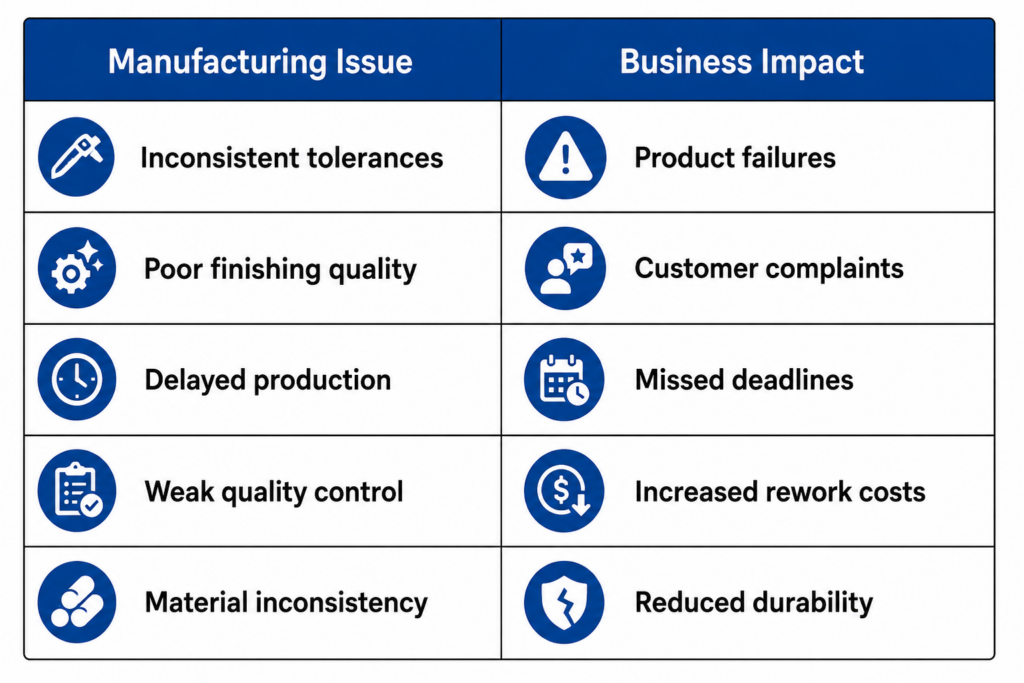
Design Errors and Rework
Poorly optimized designs can increase machining time and waste materials.
Material Waste
Inefficient cutting paths increase scrap rates and material usage.
Delayed Production
Poor planning can create supply chain bottlenecks.
Weak Quality Control
Defective components create expensive production delays.
This is why experienced manufacturers focus heavily on:
- Process optimization
- Engineering collaboration
- Quality assurance
- Material waste reduction
Effective material waste reduction strategies not only lower costs but also improve manufacturing sustainability.
How to Reduce CNC Manufacturing Costs Without Sacrificing Quality?
Reducing manufacturing expenses does not always mean choosing cheaper production.
Smart optimization often delivers better long-term savings.
Simplify Part Designs:
Reducing unnecessary complexity lowers machine time.
Optimize Tolerances:
Only apply ultra-tight tolerances where truly necessary.
Increase Production Volume:
Larger production runs improve cost efficiency through economies of scale.
Choose the Right Material:
Aluminum may reduce costs when extreme strength is unnecessary.
Work With an Experienced Manufacturing Partner?
Experienced manufacturers identify cost-saving opportunities early.
CNC Production Scalability Matters:
Manufacturing needs often evolve quickly.
A reliable manufacturing partner should support:
- Prototyping
- Mid-volume production
- Full-scale manufacturing
Strong CNC production scalability helps businesses grow without switching suppliers or sacrificing quality consistency.
Scalable manufacturing also improves:
- Lead times
- Supply chain stability
- Production efficiency
- Long-term operational planning
Benefits of Working With a Canadian CNC Manufacturing Company:
Many businesses prefer Canadian manufacturing partners because they provide:
Faster Communication:
Local collaboration improves project management.
Better Quality Oversight:
Canadian manufacturers often maintain strict quality standards.
More Reliable Lead Times:
Domestic production reduces shipping delays.
Improved Supply Chain Stability:
Local sourcing reduces international disruptions.
As global supply chain challenges continue affecting manufacturers worldwide, Canadian production partnerships are becoming increasingly valuable.
Choose a Manufacturing Partner That Delivers Long-Term Value:
Choosing the right CNC partner is about more than finding the cheapest quote.
The best manufacturers help businesses improve:
- Production quality
- Operational efficiency
- Product reliability
- Manufacturing scalability
Interchange Electronics supports businesses with precision-focused manufacturing solutions, engineering collaboration, and scalable production support designed to optimize long-term manufacturing performance.
Whether your project requires:
- Aluminum machining
- Stainless steel machining
- Precision CNC production
- Complex metal fabrication
- Scalable manufacturing support
Working with the right manufacturing partner can help reduce operational risk while improving production consistency and efficiency.
Final Thoughts:
The true cost of metal CNC manufacturing in Canada depends on far more than machine time alone.
Factors such as:
- Material selection
- Precision requirements
- Production volume
- Engineering complexity
- Surface finishing
- Quality control
all influence final pricing.
Businesses that understand these CNC manufacturing pricing factors can make smarter manufacturing decisions, improve budgeting accuracy, and reduce costly production issues.
In manufacturing, cheaper is not always more affordable in the long run.
Reliable quality, precision, and scalability often create the greatest long-term value.
FAQs
What is the average CNC machining cost in Canada?
CNC machining costs in Canada vary based on materials, complexity, and production volume, ranging from a few hundred dollars for prototypes to thousands for precision production runs.
Why is stainless steel CNC machining more expensive?
Stainless steel is harder to machine than aluminum, requiring slower cutting speeds, stronger tooling, and more machine time.
How can businesses reduce CNC manufacturing costs?
Businesses can reduce costs by simplifying part designs, optimizing tolerances, selecting cost-effective materials, and increasing production volume.
Why is CNC production scalability important?
Strong CNC production scalability allows manufacturers to support business growth while maintaining production quality, consistency, and operational efficiency.