
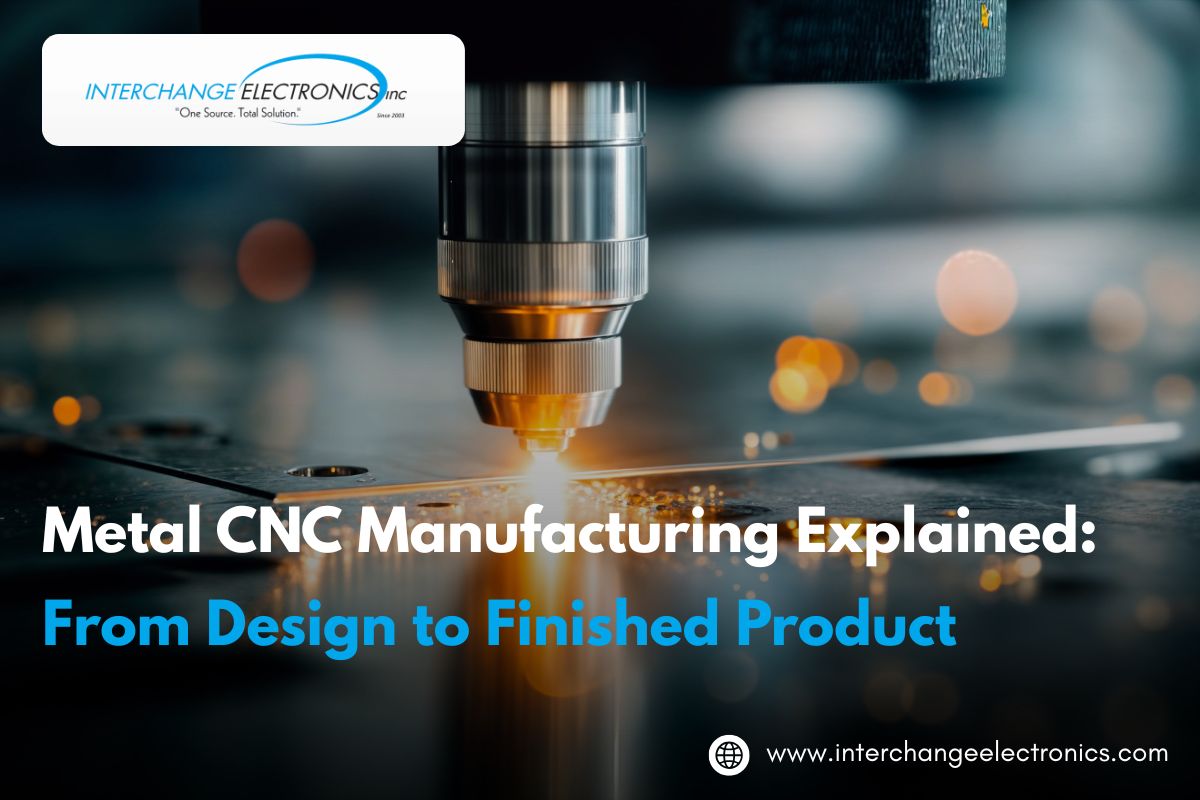
Precision and repeatability are essential in modern manufacturing. For companies producing components that must meet strict dimensional and performance requirements, metal CNC manufacturing plays a critical role. From early-stage design through final production, CNC technology enables manufacturers in Canada and the United States to deliver consistent, high-quality results across a wide range of industries.
Understanding how metal CNC manufacturing works, and why it matters, helps buyers make informed decisions when selecting a manufacturing partner.
What Is Metal CNC Manufacturing?
Metal CNC manufacturing refers to the use of computer numerical control systems to automate cutting, forming, and shaping metal components. CNC machines follow precise digital instructions derived from CAD models, ensuring every part is produced exactly as designed.
In sheet metal applications, CNC technology is commonly used for shearing, punching, bending, and forming. This approach eliminates manual variability and delivers repeatable results across low- and high-volume production runs.
The Role of Design in CNC Metal Manufacturing:
Every successful CNC project begins with proper design. Manufacturers review CAD files and technical drawings to confirm dimensions, tolerances, and material selection. Design for Manufacturing guidance is often provided to optimize part geometry, reduce cost, and improve manufacturability.
During this stage, engineers may adjust bend radii, hole placements, or material thickness to ensure parts can be produced efficiently without compromising performance. Early collaboration between design and manufacturing teams is critical to achieving the best outcome.
CNC Programming and Process Setup:
Once the design is finalized, CNC programs are created to control the manufacturing equipment. These programs define tool paths, cutting sequences, and forming operations with high precision.
In metal CNC manufacturing, accurate programming ensures:
- Tight dimensional tolerances
- Consistent part geometry
- Efficient material utilization
- Reduced cycle times
This level of control is especially important for custom sheet metal products that must integrate with other components or assemblies.
Precision Cutting and Forming:
CNC shearing and punching machines cut metal sheets to precise dimensions based on programmed instructions. CNC forming and bending equipment then shapes the metal into its final configuration while maintaining uniform bend angles and dimensions.
Compared to manual methods, CNC fabrication offers significantly higher accuracy and repeatability. This precision is essential for parts used in electronics enclosures, industrial equipment, and mechanical assemblies where fit and alignment are critical.
Material Consistency and Quality Control:
Material selection plays a major role in CNC metal manufacturing. Common materials include aluminum, stainless steel, and carbon steel, each chosen based on strength, corrosion resistance, and application requirements.
North American manufacturers emphasize material traceability and quality verification. Materials are sourced from verified suppliers and inspected to ensure consistency throughout production. This reduces variability and ensures predictable performance across production runs.
Inspection and Quality Assurance:
Quality control is integrated throughout the CNC manufacturing process. Dimensional inspections and in-process checks verify that parts meet design specifications before moving to the next stage.
In many facilities, inspection includes:
- Dimensional measurement
- Visual inspection
- Fit and assembly checks
- Documentation of critical features
This proactive approach helps identify issues early, minimizing rework and ensuring consistent quality.
CNC Manufacturing and Integrated Production:
Metal CNC manufacturing often supports larger production workflows that include sheet metal fabrication, finishing, and assembly. Many products also integrate with plastic components or cable assemblies.
Working with a manufacturer that offers multiple capabilities under one roof simplifies coordination and reduces risk. CNC-produced metal parts are more likely to fit correctly with plastic injection parts or cable assemblies when all components are produced using aligned processes and shared quality standards.
Why North American CNC Manufacturing Matters?
Manufacturers in Canada and the United States operate under strict quality and safety standards. CNC facilities follow documented procedures and inspection protocols that protect buyers from inconsistent quality and supply chain disruptions.
Key advantages of North American CNC manufacturing include:
- High accountability and transparency
- Shorter lead times
- Responsive engineering support
- Compliance with industry requirements
These factors make North American metal CNC manufacturing a reliable choice for mission-critical components.
Choosing the Right CNC Manufacturing Partner:
When evaluating a CNC manufacturing partner, buyers should consider more than just equipment. Important factors include:
- CNC capabilities and production capacity
- Engineering and design support
- Quality control and inspection processes
- Experience with similar applications
- Ability to support custom sheet metal products and assemblies
A capable partner provides not only precision parts, but long-term manufacturing stability.
Final Thoughts:
Metal CNC manufacturing is a cornerstone of modern sheet metal fabrication, enabling precision, consistency, and scalability. From design and programming to cutting, forming, and inspection, CNC processes ensure parts meet exact specifications.
For companies in Canada and the United States, choosing a North American CNC manufacturing partner delivers dependable quality, responsive support, and long-term value. Precision CNC manufacturing is not just a production method, it is a strategic advantage.